Urban Spaceport · Brooklyn Navy Yard
The Silent Leap
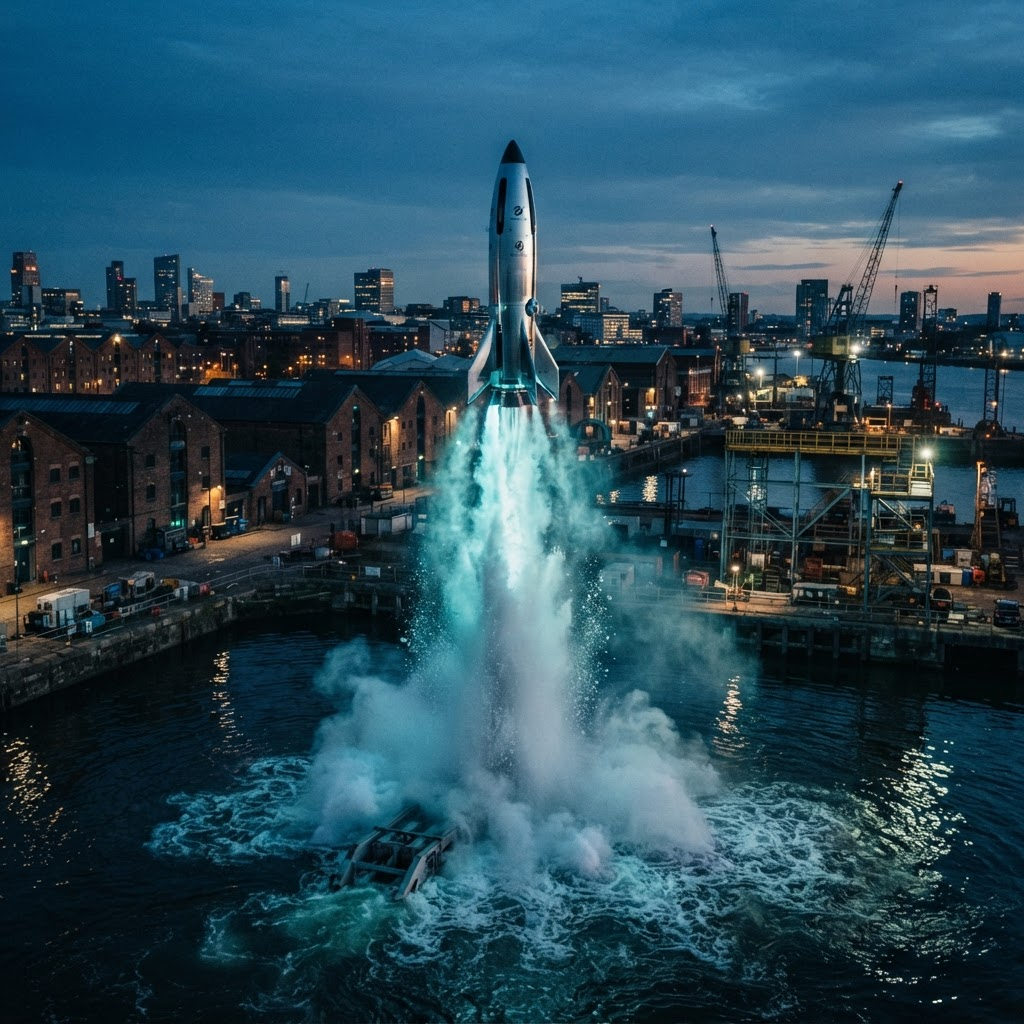
A sea-borne cold pneumatic push — compressed gas, not combustion — lifts a single-stick rocket off a floating cradle before its engines ever light. Flameless. Near-silent. The quiet first move that lets a spaceport live beside a city instead of banished to a desert.
Take the tour
Featured experiences
Explore the harbour
Tap a point on the map
The whole concept sits on one stretch of water. Tap any marker to open that piece of it.
The core idea
Why the first move is silent
Every rocket you have ever watched leaves the pad the same way: a chemical inferno, a wall of sound, a blast zone that pushes people miles back. That noise and that flame are the whole reason spaceports get exiled to empty coastlines and deserts. The Silent Leap removes the first flame.
Instead of igniting on the ground, a single-stick, in-line vehicle — the silhouette of a Delta IV, one clean core with the capsule stacked on top — is pushed off a floating sea cradle by a burst of compressed gas. It is a cold launch: the same principle that ejects a missile from a submarine tube or a fighter from a catapult, scaled and softened for a crewed vehicle. The vehicle is already hundreds of feet in the air, clear of the city, moving upward, before its engines light.
The engine ignition — the loud part — happens at altitude and over open water, where the East River and the harbor swallow and scatter the sound. The neighborhood hears a rush of air, not a roar.
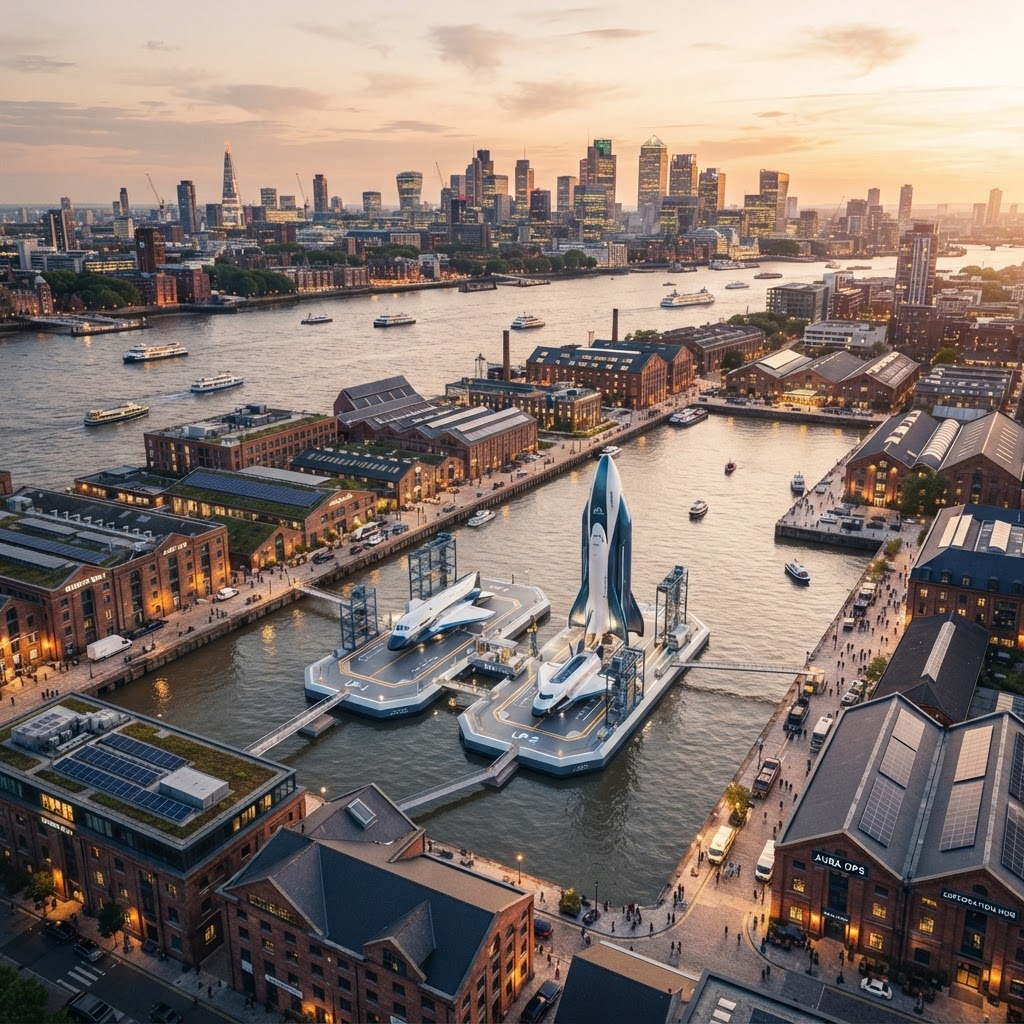
Brooklyn Navy Yard — a working industrial waterfront, deep-water frontage, and a city that already builds things. The cradle floats; the water is the blast buffer.
Cold pneumatic push
Compressed gas lifts the stack off the cradle. No ground flame, no launch-pad blast, a fraction of the noise. Engines light high and downrange.
Sea-borne cradle
A floating platform on the East River. Water absorbs energy, isolates vibration, and gives an instant clear zone no land pad can match.
Water-buffered safety
If anything goes wrong, the abort path is out over open water — away from streets and people. The river is the safety margin.
Launch sequence
From cradle to orbit
- 1T-00:00
Cold push
A pneumatic charge ejects the vehicle from the floating cradle. Silent. The stack rises on a column of vapor.
- 2T+00:04
Clear of the deck
The vehicle is well above the platform and the waterline, still climbing on momentum alone.
- 3T+00:06
Ignition at altitude
The single core lights high above the harbor. The loud phase happens over open water, away from the city.
- 4T+02:30
Downrange & up
The vehicle arcs out over the Atlantic approach, engines carrying it the rest of the way to orbit.
A concept brief, not a flight manifest. The Silent Leap is an engineering vision and a design conversation — a living brief we extend as the idea matures. The physics of cold-launch (pneumatic and catapult ejection) is real and proven at smaller scales; applying it to a crewed urban spaceport is the ambitious, unproven leap this page explores. The instruments here — the acoustic-footprint model and the abort-trajectory simulation — are illustrative tools for reasoning about the idea, not certified analyses.
From concept to cadet
Step into the Silent Leap
The Silent Leap is the launch concept. The Astronaut Training experience is how you step into it — walk the consoles, fly the drills, earn your certificate, and visit the experience.